

Executive Summary:
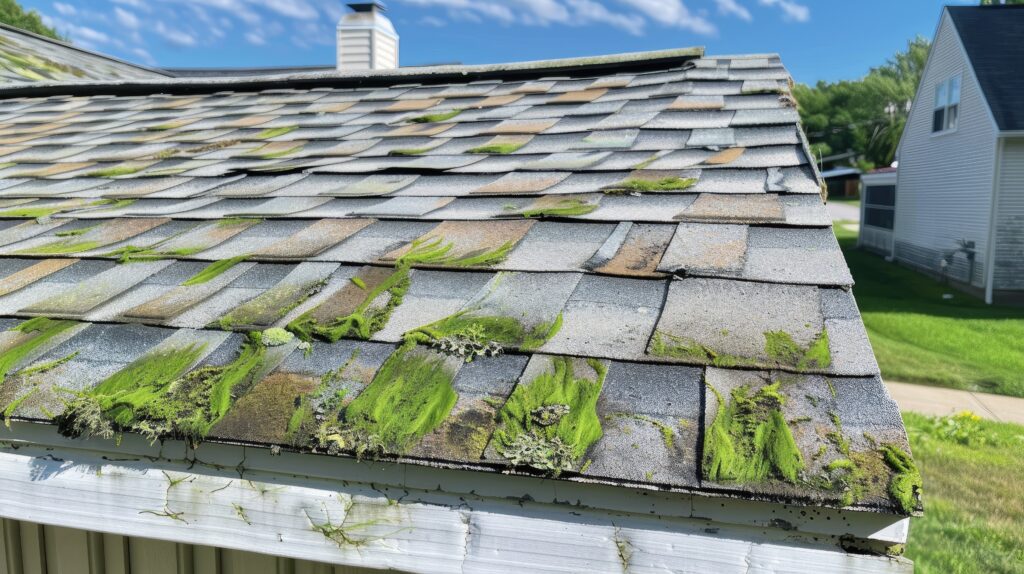
Moss and algae grow on roof shingles when moisture, shade, and debris give them a foothold. Algae mostly leaves dark stains, while moss holds moisture and can lift shingle edges. Harsh chemicals, power washers, and abrasive tools can cause more damage than the growth itself. Safe removal calls for the right treatment, a gentle touch, and regular roof maintenance.
Moss and algae can make a well-kept roof look neglected, and moss can do more than spoil the view. Algae leaves dark streaks across shingles, while established moss holds moisture against the roof and disturbs shingle edges. The fix needs care, because aggressive scrubbing and high-pressure washing can strip protective granules or loosen shingles. In this guide, we walk through safe cleaning methods and simple prevention steps, and we explain when to call a roofer.
Why Moss and Algae Grow on Roof Shingles
Moss and algae need moisture to grow, so shaded roof sections that stay damp after rain face the highest risk. In the Central Valley, winter rain and fog can keep north-facing and tree-covered slopes wet long after a storm passes. Common causes include:
- Moisture and winter rainfall: Repeated rain and high humidity keep shingles damp and give organic growth the conditions it needs.
- Limited sunlight and shaded roof areas: Overhanging branches and nearby structures block sunlight and slow drying.
- Poor roof drainage: Clogged gutters and downspouts can hold water along roof edges.
- Accumulated leaves and organic debris: Pine needles, leaves, and twigs trap moisture against shingles and encourage moss.
- Roof sections that remain damp: Valleys and shaded sections dry more slowly than exposed areas, which makes growth more likely.
Spot these conditions, and you can deal with the reasons behind moss and algae instead of only cleaning up the result.
Can Moss and Algae Damage Roof Shingles?
Moss and algae affect shingles differently. Algae creates dark streaks that make a roof look older than it is, but the damage is mostly cosmetic.
Moss is the bigger concern. Its dense growth holds moisture against the shingles and spreads around their edges. As it takes hold, it can lift or curl shingles, which leaves those sections more open to wind damage and water intrusion.
So, is roof moss harmful? Yes, especially when it grows thick or stays untreated for a long time. Older shingles face the greatest risk. Arrange an inspection if you notice widespread growth, lifted shingles, or signs of moisture beneath the roof.
How to Clear Moss and Safely Remove Algae from Roof Shingles
A reliable roof moss removal guide puts the condition of your shingles first. Your goal is to treat the growth without stripping protective granules or disturbing the roofing materials.
1. Inspect the Roof Before Cleaning
Start by checking the affected areas for moss, algae stains, and debris. Look for cracked, curled, lifted, or missing shingles that need attention before you clean.
Stay off steep or wet roofs. Binoculars let you check most visible problems from the ground. If your roof is hard to reach or shows signs of wear, call a professional instead of doing the work yourself.
2. Choose the Right Cleaning Solution
Choose a product made for asphalt shingles and the type of growth on your roof. Some treatments target algae, while others work on moss.
Avoid any chemical the label does not approve for asphalt roofing, and never mix cleaning products. Follow the manufacturer’s directions for application, dilution, and safety gear. Runoff can harm plants and waterways, so protect your landscaping and keep the treatment out of storm drains.
3. Apply the Treatment Gently
Apply the solution with a low-pressure sprayer on a calm, dry day, and cover only the affected areas. Use only the amount the manufacturer recommends.
Give the treatment time to work. Some products weaken moss and algae gradually over several days, while others need a set waiting period. Do not scrub right after application, because that can disturb the shingles without improving the results.
4. Remove Loosened Growth Carefully
Once the treatment has worked, check if the moss has loosened. Rain may wash some dead growth away on its own. If the product instructions allow manual removal, use a soft-bristled brush and very light pressure.
Never pull at moss attached to shingle edges. Metal scrapers, stiff brushes, and sharp tools can scratch the surface or strip protective granules, so leave them in the garage.
5. Rinse Without Excessive Pressure
If the product requires rinsing, use a garden hose on a gentle flow. Aim the water down the roof slope, never upward beneath the shingle overlaps.
Strong water pressure can damage shingles and force moisture under them. Some treatments work gradually and need no rinsing, so always check the label.
How to Prevent Moss Growth on Shingles and Stop Algae from Returning
Cleaning solves only half the problem, so deal with the conditions that encouraged growth in the first place. A consistent roof mold and algae prevention routine reduces discoloration, discourages new moss, and keeps your shingles in better condition.
Keep Gutters and Downspouts Clear
Clear leaves and debris regularly so rainwater can drain properly. Blocked gutters hold water near roof edges and keep those areas damp.
Trim Overhanging Branches
Tree branches block sunlight and airflow, and they drop leaves and twigs onto the roof. Trimming them helps your roof dry faster and reduces debris.
Keep the Roof Free of Organic Debris
Leaves, pine needles, and small branches trap moisture against shingles. Check visible roof sections every so often, especially after storms. Stay off the roof if clearing debris feels unsafe.
Schedule Periodic Roof Inspections
Routine inspections catch damaged shingles, drainage problems, and early signs of new growth. A professional can also tell you if your roof needs more maintenance.
Found damaged shingles while cleaning? Contact California Roofing Services about professional shingle roof repair, and we will fix vulnerable sections before the problem worsens.
When DIY Roof Cleaning Is Not the Best Choice
Cleaning a roof yourself is not always safe or sensible. Call a professional in these situations:
| Situation | Why professional help makes sense |
| Extensive moss or algae coverage | Large areas may need specialized treatment and a careful assessment of the roofing materials. |
| Steep or hard-to-reach roofs | Steep, elevated surfaces raise the risk of falls and make cleaning harder. |
| Brittle or aging shingles | Older shingles can crack, break, or lose protective granules during cleaning. |
| Visible roof damage | A roofer should assess missing, lifted, or worn shingles before any cleaning begins. |
| Persistent moisture problems | Recurring dampness may point to a drainage or ventilation issue. |
| Growth that returns after cleaning | Repeat growth may signal an underlying issue that surface treatment cannot solve. |
A roofer can protect your roofing materials and spot any repairs or maintenance your roof needs.
FAQs
Does Moss Damage Roof Shingles Over Time?
Yes. Established moss holds moisture against shingles and can gradually lift their edges. Heavy growth can also hide existing damage, so treat it promptly and keep up with regular inspections.
Can You Power Wash Moss Off a Shingle Roof?
No, we do not recommend power washing asphalt shingles. High-pressure water can strip protective granules, loosen shingles, and force water under the roofing materials. A roof-safe treatment applied at low pressure is the safer choice.
How Do You Stop Moss and Algae from Returning to a Roof?
Keep gutters clear, remove debris, and trim branches that cast heavy shade. Use roof-safe treatments when needed, and book periodic inspections to catch recurring moisture problems.
When Does Moss Buildup Require Professional Roof Repair?
Call a roofer when moss covers large areas, keeps coming back, or appears alongside cracked, missing, or lifted shingles. Interior water stains and persistent moisture also call for a roofing assessment.
Conclusion
Safe moss and algae removal comes down to the right treatment and a gentle hand. Skip power washing, aggressive scraping, and unsuitable chemicals that can damage shingles. Clear gutters, trimmed branches, and regular inspections will help limit new growth. When moss spreads or appears alongside visible damage, bring in a professional to protect your roofing system.
Connect with California Roofing Services, your local roof inspection company, to arrange an assessment and find out what your shingles need.